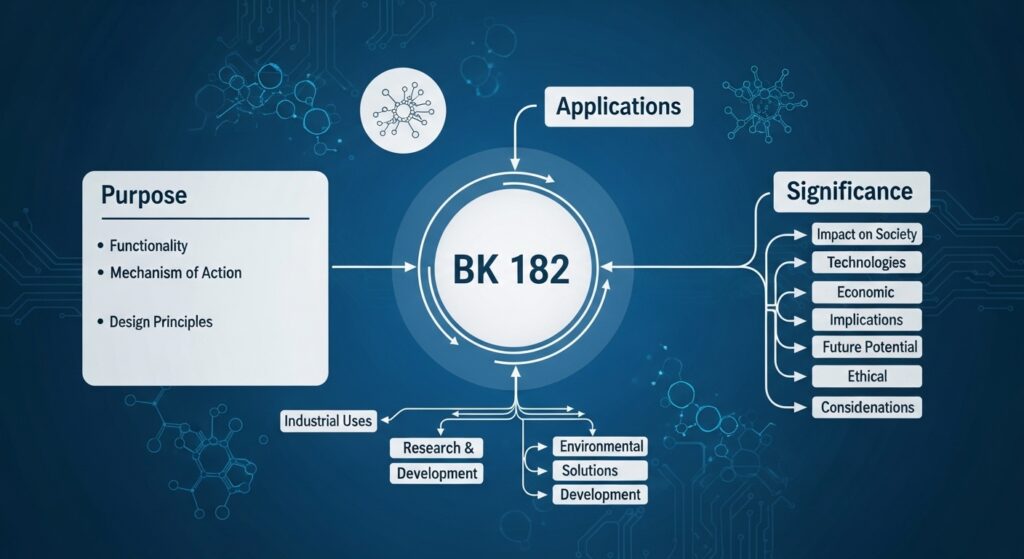
In the ever-evolving landscape of technology, machinery, and industrial systems, products and devices often carry specific model names or numbers that reflect their function, origin, or version. One such designation is BK 182. While the term may appear cryptic at first glance, BK 182 refers to a specialized device, machine, or system used in industrial, technological, or commercial applications.
Understanding BK requires a look at its design, applications, and practical significance. It is often associated with efficiency, reliability, and precise functionality, making it a valuable component in its respective field. Whether used in manufacturing, engineering, or specialized industrial processes, BK 182 has become recognized for its effectiveness and adaptability.
What is BK 182?
BK 182 typically refers to a specific model of equipment, machinery, or a technological tool. Its exact function depends on the industry or context in which it is used. Commonly, BK 182 could denote:
-
A piece of industrial machinery used for production or assembly lines.
-
A specialized component in electronics or mechanical systems.
-
A model of a device designed for high precision and reliability in professional settings.
The key characteristic of BK is its design to meet specific technical requirements while ensuring durability and efficiency.
| Feature | Description | Benefit |
|---|---|---|
| Precision Engineering | Designed to meet exact standards | High accuracy |
| Reliability | Built for consistent performance | Minimal downtime |
| Industry-Specific Design | Tailored for certain applications | Optimized functionality |
| Scalability | Can be integrated with other systems | Adaptable to various needs |
Key Features of BK 182
The appeal of BK 182 lies in its combination of functionality and performance. While the exact features depend on its application, some general aspects include:
High Precision
BK 182 is engineered to provide accurate performance, whether in mechanical assembly, electronic systems, or industrial automation. Precision reduces errors and ensures consistent results.
Durability
Constructed with high-quality materials, BK is designed to withstand rigorous use in industrial or professional environments. This makes it a reliable long-term investment.
Versatility
Depending on the model, BK 182 can often be adapted for multiple functions within its domain, increasing its utility and reducing the need for multiple devices.
Easy Integration
BK 182 is typically designed to work seamlessly with existing systems, machinery, or workflows. This reduces setup time and enhances overall productivity.
| Feature | Purpose | Advantage |
|---|---|---|
| High Precision | Accurate output | Reduces errors |
| Durability | Long-lasting use | Cost-effective |
| Versatility | Multiple applications | Flexible functionality |
| Integration | Compatibility with systems | Efficient deployment |
Applications of BK 182
BK 182 can be utilized in a variety of settings, depending on its design and intended use. Common applications include:
Industrial Manufacturing
BK 182 may serve as machinery for assembly, processing, or quality control. Its precision ensures products meet exact specifications.
Engineering Systems
In engineering applications, BK may act as a component in larger systems, contributing to automation, data processing, or mechanical operations.
Electronics and Technology
Certain models of BK can be specialized devices in electronics, performing tasks such as signal processing, calibration, or monitoring.
Commercial Use
In commercial settings, BK may assist with processes requiring efficiency and consistency, such as packaging, sorting, or production line tasks.
| Industry | Use Case | Outcome |
|---|---|---|
| Manufacturing | Assembly and quality control | High-quality production |
| Engineering | Component in automated systems | Precise operations |
| Electronics | Signal monitoring or processing | Accuracy and efficiency |
| Commercial | Packaging and sorting | Time and labor savings |
Benefits of Using BK
The use of BK provides several advantages across industries:
-
Precision: High accuracy reduces errors and waste.
-
Reliability: Consistent performance ensures minimal downtime.
-
Efficiency: Streamlined operations save time and labor costs.
-
Adaptability: Versatility allows integration into various workflows.
-
Cost-Effectiveness: Durable construction reduces long-term maintenance costs.
| Benefit | Impact |
|---|---|
| Precision | Higher-quality output |
| Reliability | Less downtime |
| Efficiency | Faster operations |
| Adaptability | Flexible use in multiple settings |
| Cost-Effectiveness | Long-term savings |
Challenges and Considerations
While BK offers many advantages, potential users should consider:
-
Maintenance Needs: Regular servicing may be required to maintain optimal performance.
-
Training Requirements: Operators may need specialized training to handle BK 182 effectively.
-
Initial Cost: Depending on the model, the upfront investment may be significant.
-
Compatibility: Ensuring the device integrates seamlessly with existing systems is crucial.
| Challenge | Description | Mitigation |
|---|---|---|
| Maintenance | Needs periodic servicing | Schedule routine checks |
| Training | Requires skilled operators | Provide proper training |
| Initial Cost | High upfront expense | Evaluate ROI and lifespan |
| Compatibility | Must fit existing systems | Assess integration needs |
Future of BK 182
As industries evolve and technology advances, BK 182 is likely to see improvements in:
-
Enhanced automation and AI integration for smarter operations.
-
Improved materials for durability and sustainability.
-
Expanded functionality to serve multiple applications within a single unit.
-
Increased efficiency and precision through upgraded engineering and software support.
The future of BK 182 lies in its ability to adapt to changing industry demands while maintaining reliability, precision, and value.
Conclusion
BK 182 represents a highly specialized tool, device, or machinery model designed for precision, reliability, and efficiency. Its applications range from industrial manufacturing and engineering systems to electronics and commercial processes.
The device offers numerous benefits, including enhanced accuracy, operational efficiency, adaptability, and long-term cost-effectiveness. While considerations such as maintenance, training, and compatibility exist, the advantages make BK a valuable asset in professional and industrial environments.
By integrating BK into workflows, businesses and professionals can achieve higher productivity, improved outcomes, and greater reliability in their operations.